

You tested positive. Now what?
It is normal to feel scared or overwhelmed by a positive test result. Rember some STIs/STDs are curable, and others are treatable, which means that with proper care (e.g. medication prescribed by your healthcare provider), the infection can clear up or be managed. Healthcare providers may provide additional testing, treatment options, medication and barrier methods so someone can feel healthy, safe, and confident in making decisions for their sexual health.

How to Pay for Clinic Visits & Treatment
It is normal to feel scared or overwhelmed by a positive test result. Rember some STIs/STDs are curable, and others are treatable, which means that with proper care (e.g. medication prescribed by your healthcare provider), the infection can clear up or be managed. Healthcare providers may provide additional testing, treatment options, medication and barrier methods so someone can feel healthy, safe, and confident in making decisions for their sexual health.

Connect with a Healthcare Provider
There are several ways to connect with a healthcare provider to discuss a positive test result.
At-home test: connect with provider via telehealth to receive treatment options.
At- home test (partnership): the local public health department connects with client to schedule an appointment for further STI screening, treatment options, and health education.
Rapid STI test: discuss results and treatment options on-site at the clinic, community health center or mobile health unit where rapid STI test was taken.
Testing with primary health provider – return for follow up visit to receive treatment and health education.
Many at-home testing kit services include connecting individuals to free or low-cost consultations with a healthcare provider to discuss results, treatment and health education after receiving a positive test result. Options to transition to in-person care are available when needed. There may be options to have medication delivered to you.
Rapid STI tests offered onsite (clinic, health department, community health center) may have results available within 20-45 minutes. After receiving test results. Health care providers will offer information, counseling, and treatment options available on the same day or at a follow-up appointment.
Individuals who do not have a primary health provider or insurance can access treatment for free or low-cost at local health department’s clinics, family planning clinics, student health centers, or urgent care clinics.
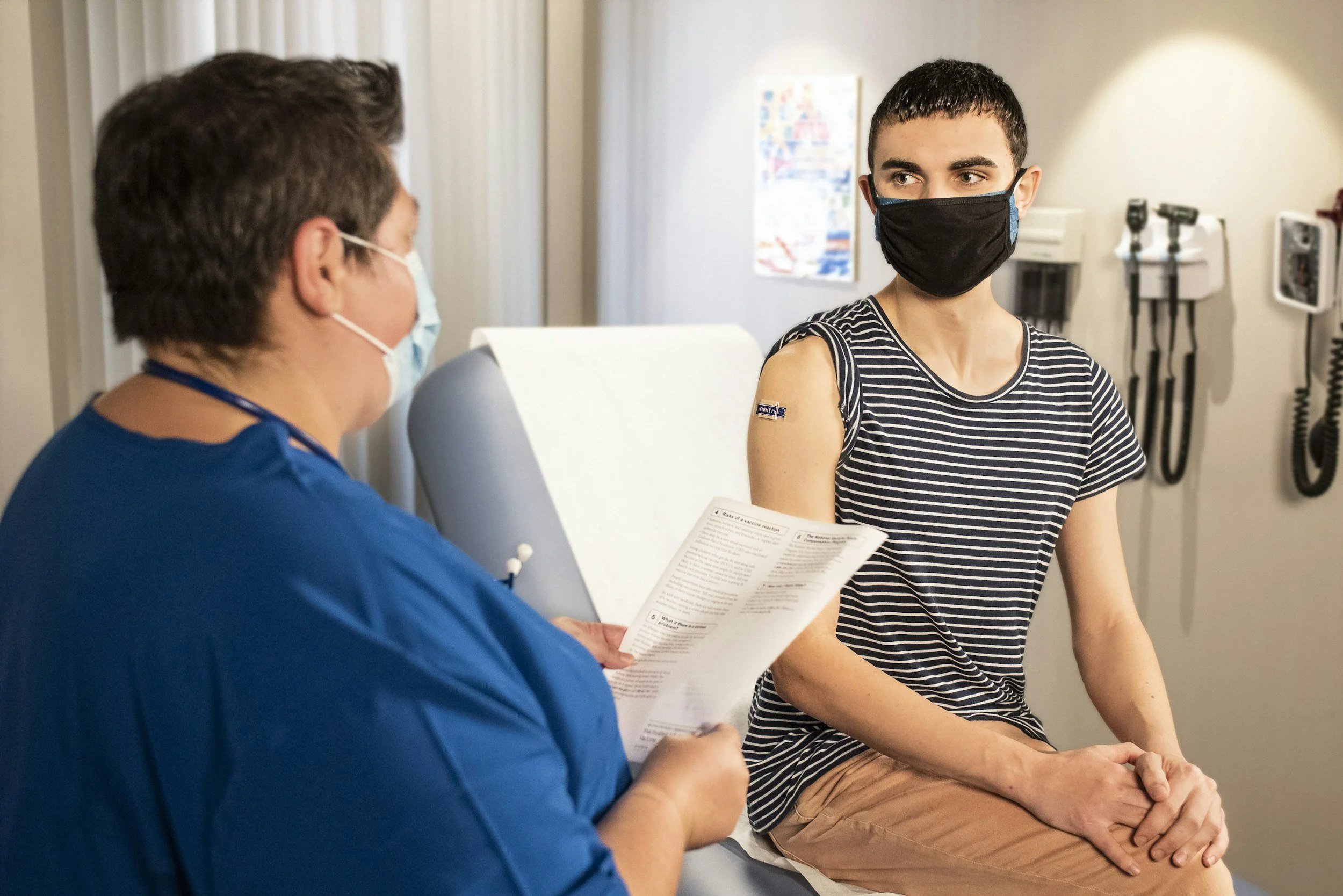
Clinic Visit/Consultation
(What to expect/ how to navigate your visit)
When contacting a healthcare provider, ask if they offer tests and treatment for the specific STI you tested for. This would also be an opportunity to get information on insurance accepted and payment options prior to your visit. There may be options for services that are free, low-cost, or provide a sliding fee scale for STI testing and treatment.
When scheduling an appointment for treatment, there may be an option available for a walk-in visit, which means someone may be treated the same day.
It is important to remember that testing and treatment sites are confidential. Teen health rights in California allow the right for teens to receive confidential/private reproductive healthcare 12 years of age or older. (teenhealthlaw)
During your visit to the clinic the following may occur:
Check in for appointment at front desk or via kiosk to let staff know you have arrived
Complete any pending forms (medical history, insurance, STI questionnaire)
Wait to be seen by nurse for intake (vital check, samples for additional testing)
Health provider may conduct a physical check and STI screening
Health providers may give a single or first dose of medication (shot injection or oral pill)
Medication may be prescribed for ongoing treatment
Additional counseling with a health education nurse or primary doctor on regular testing for self and partner(s), use of barrier methods to lower transmission of STIs, questions and scheduling follow-up appointments.
At the end of your visit, you may receive a prescription for medication to take for a few days or routinely/ongoing. A healthcare provider will explain how to take the medication, as well as suggest scheduling follow-up appointments. This medication may be provided on site or sent to a local pharmacy where the prescription can be filled and consultation on how to utilize the medication can be given.
During a Telehealth appointment or online care, the following may occur:
Sent virtual forms to complete prior to appointment (medical history, STI questionnaire, insurance)
Telehealth visits with options for a call or video chat (based on preference, availability, or need)
Health providers conduct health screening questionnaires, discussing any possible symptoms.
Discuss options of in person care if necessary
Prescribe medication for STI treatment
Additional counseling with a health education nurse, primary doctor on regular testing for self and partner(s), use of barrier methods to lower transmission of STIs, questions and scheduling follow-up appointments

Treatment Plan
Treatment for STIs vary on the type of infection. If the STI is viral, anti-viral medication will be prescribed long-term to manage symptoms. If the STI is bacterial, antibiotics will be prescribed for a period to remove the infection from the body.
To treat bacterial STIs, healthcare providers may prescribe oral medication, cream or injected (shot) antibiotics.
It is recommended that sexual activity be avoided until full dosage of medication has been completed. This medication can also be prescribed to sexual partners who may have been exposed to the infection.

Tell Your Partner
Talking to your partner about test results can encourage testing, treatment, and safer sex practices. If you are feeling shame, guilt or embarrassment before or after the conversation, it is important to remember that you are not alone. STIs are common and there are resources available to treat and prevent them in the future! Talking with support groups and healthcare professionals can offer information without judgement.
If planning to inform a partner(s) directly, there are several tips and guidance on how to start the conversation.
Some recommendations to consider when having conversations about STI status include:
Think about what you want to say
Make time for the conversation
Remember that you’re doing the responsible thing
Offer resources
Talk about next steps
Sourced from Planned Parenthood
Some health departments may be able to inform partners of potential exposure through a partner notification system. The health department can provide testing information and additional medication for your partner.

Follow-Up Care
Regular testing and treatment can safeguard yourself and those around you. It is recommended to get tested regularly during the following times:
Every 6 to 12 months
If you don’t know your STI status or your partner’s STI status
If you have a new sexual partner(s)
If you are pregnant
If you have been exposed to an STI
If your partner shares a positive test result.
Sharing needles with others
STIs are preventable. Talking with your partner about condom/barrier methods can reduce STI transmission (passing the infection to others).